

Featured
IoT-based Wireless Home Appliances Monitoring and Control System
Offer end in:
₹0 - ₹0 ₹0 / ₹0
Description
Ask For Price |
An IoT-based Wireless Home Appliances Monitoring and Control
System is a smart home solution that uses the Internet of Things (IoT) to
remotely monitor and manage household appliances and devices. This system
enables homeowners to control appliances, receive real-time information, and
automate tasks for increased convenience, energy efficiency, and security.
Here's a detailed description of how it works:
Components:
- Smart
Appliances: These are appliances and devices that are equipped with
IoT connectivity. Examples include smart thermostats, smart lighting,
smart plugs, and smart home security systems.
- IoT
Devices: These devices serve as the bridge between the appliances and
the central control system. Examples include smart hubs or IoT gateways.
- Central
Control System: This is typically a cloud-based platform or a local
server that connects to and manages all the smart appliances and IoT
devices.
- User
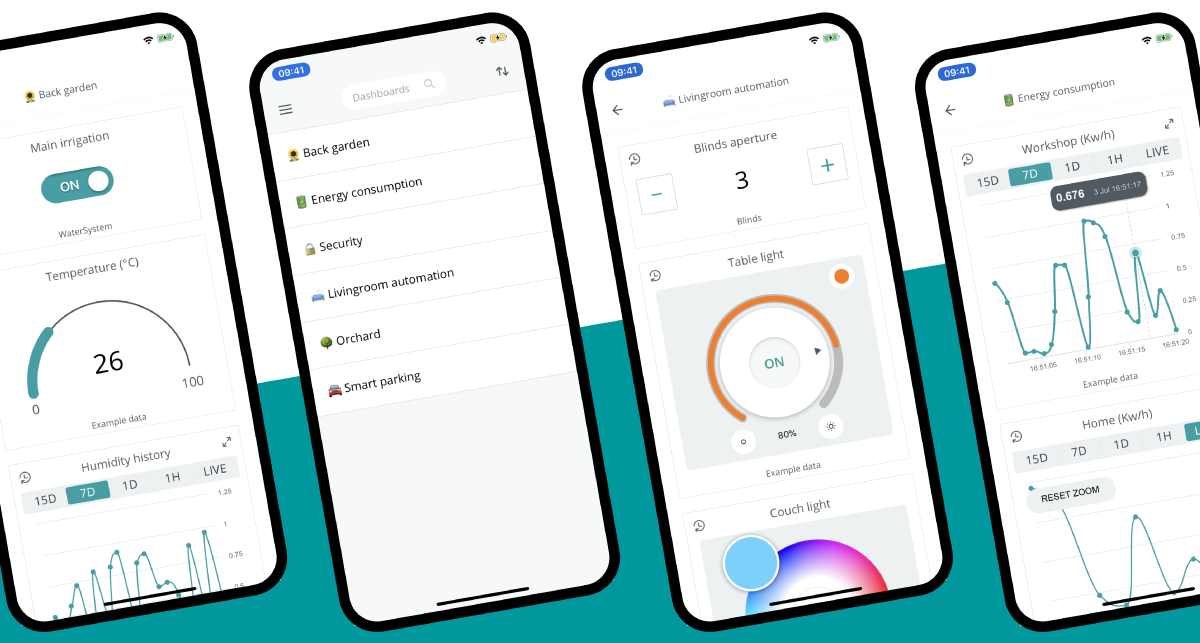
Interfaces: Users can control and monitor their appliances through
various interfaces, such as mobile apps, web portals, voice assistants, or
dedicated remote controls.
- Sensors:
Sensors, such as motion detectors, temperature sensors, and door/window
sensors, can be integrated to provide additional information for
automation and security.
Working Principle:
- Appliance
Integration: Smart appliances are connected to the IoT network. They
can be added to the system through the central control system or mobile
app.
- Data
Collection: Smart appliances continuously collect data, such as energy
usage, status, and environmental conditions (e.g., temperature, humidity).
- Control
Commands: Users can remotely control the appliances using the user
interface. For example, they can turn lights on/off, adjust thermostat
settings, or lock/unlock doors.
- Automation
Rules: Users can set automation rules or schedules. For example,
lights can be programmed to turn on automatically at sunset, the
thermostat can adjust temperature based on occupancy, or doors can be
locked when leaving the house.
- Remote
Monitoring: Users can monitor the status of appliances in real-time.
They can check if lights are on, the temperature of their home, or whether
doors are locked, all from their mobile device.
- Alerts
and Notifications: The system can send alerts and notifications to users.
For instance, it can alert homeowners when the security system detects
motion or when the refrigerator door is left open.
- Energy
Efficiency: The system can provide energy consumption data, allowing
users to make informed decisions about energy usage and reduce costs.
Advantages:
- Convenience:
Remote control and monitoring of home appliances, providing convenience
and flexibility.
- Energy
Efficiency: Allows for better management of energy consumption and
potentially reduces utility bills.
- Security:
Enhances home security with features like remote locking/unlocking, motion
detection, and intrusion alerts.
- Customization:
Users can customize automation rules to suit their specific needs and
preferences.
- Integration:
The system often supports integration with voice assistants, like Amazon
Alexa or Google Assistant.
Limitations:
- Initial
Setup: Setting up the system and integrating all devices can be
time-consuming.
- Cost:
Smart appliances and IoT devices can be more expensive than traditional
counterparts.
- Security
Concerns: IoT devices can be vulnerable to security breaches if not
properly configured and updated.
- Dependence
on Internet Connectivity: The system relies on a stable internet
connection; disruptions may affect functionality.
In summary, an IoT-based Wireless Home Appliances Monitoring
and Control System provides homeowners with the ability to manage their
household appliances, enhance energy efficiency, and improve security, all from
the convenience of their mobile device or web interface. It represents a
significant advancement in home automation and smart living.